Guide · National
A guide to protective styles
Protective styles tuck away the ends of natural hair to reduce daily manipulation. Here’s an overview of popular options and how to keep your hair healthy while you wear them.

Options
Braids and cornrows
Box braids and knotless braids are individual braids, often with added hair for length. Knotless braids start with your own hair and gradually feed in extensions, which many people find lighter at the root. Cornrows are braided flat to the scalp and can be worn alone or as the base for a sew-in or wig.
Options
Twists, locs and sew-ins
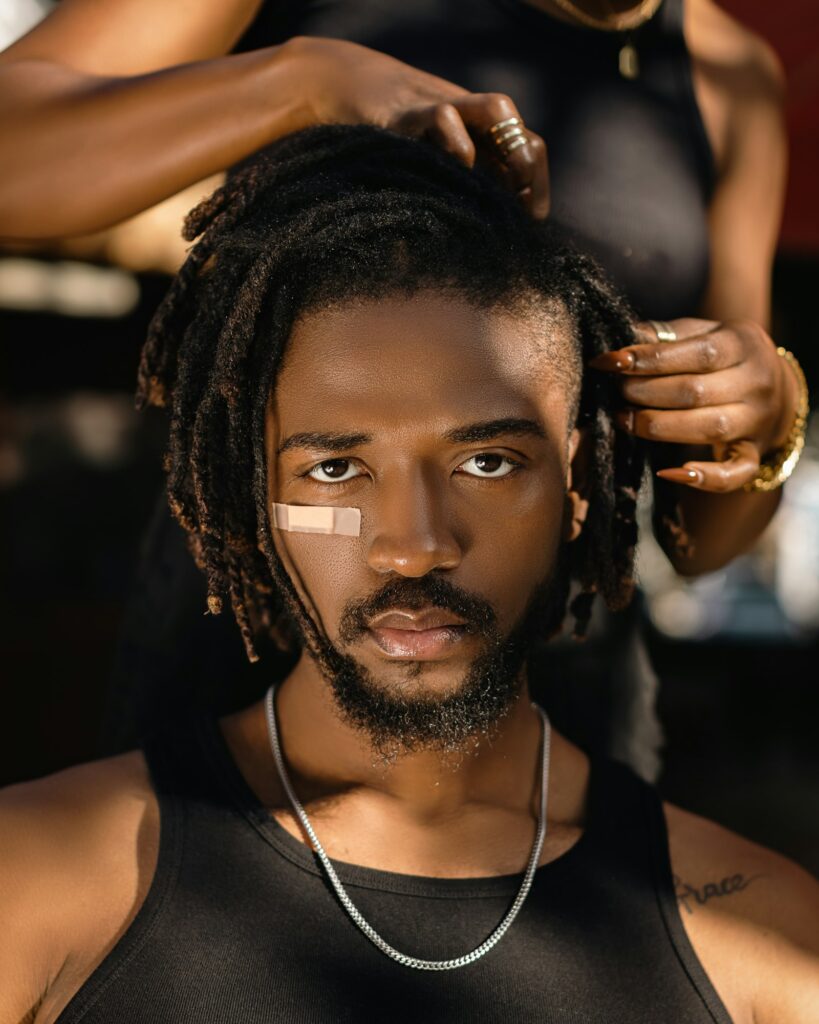
Twists are quicker to install and remove than braids. Locs are a long-term style that needs regular retwisting or interlocking at the root. Sew-ins and wigs let you change your look while your natural hair stays braided underneath.
Care
Keep your hair healthy
- Avoid styles that feel too tight or cause pain or bumps at the hairline.
- Keep your scalp clean and moisturized, and follow your stylist's washing advice.
- Sleep with a satin scarf, bonnet or pillowcase.
- Don't keep a style in longer than your stylist recommends.
- Give your edges and scalp a break between installs.
Choose
Choosing a stylist
Look for a stylist with recent photos of the exact style you want, clean parts and neat ends. Ask how long the install takes, whether hair is included, and how they protect the hairline from tension.
FAQ
Frequently asked questions
Many stylists recommend several weeks, depending on the style, your hair and how well the roots hold up. Ask your stylist for a specific timeframe.
Knotless braids start with your natural hair, so many people find them lighter and less tense at the root. Both can be protective when installed and cared for properly.
They don’t make hair grow faster, but they can reduce breakage, which helps you keep length.
Many people retwist or interlock every four to eight weeks, depending on growth and the look they want.
Ask whether the stylist provides hair. Many prefer you arrive with clean, detangled and stretched hair.
Related
Related services
Directory
Find one near you
Barbershops
Browse barbershops by state and city.
Hair Salons
Browse hair salons by state and city.